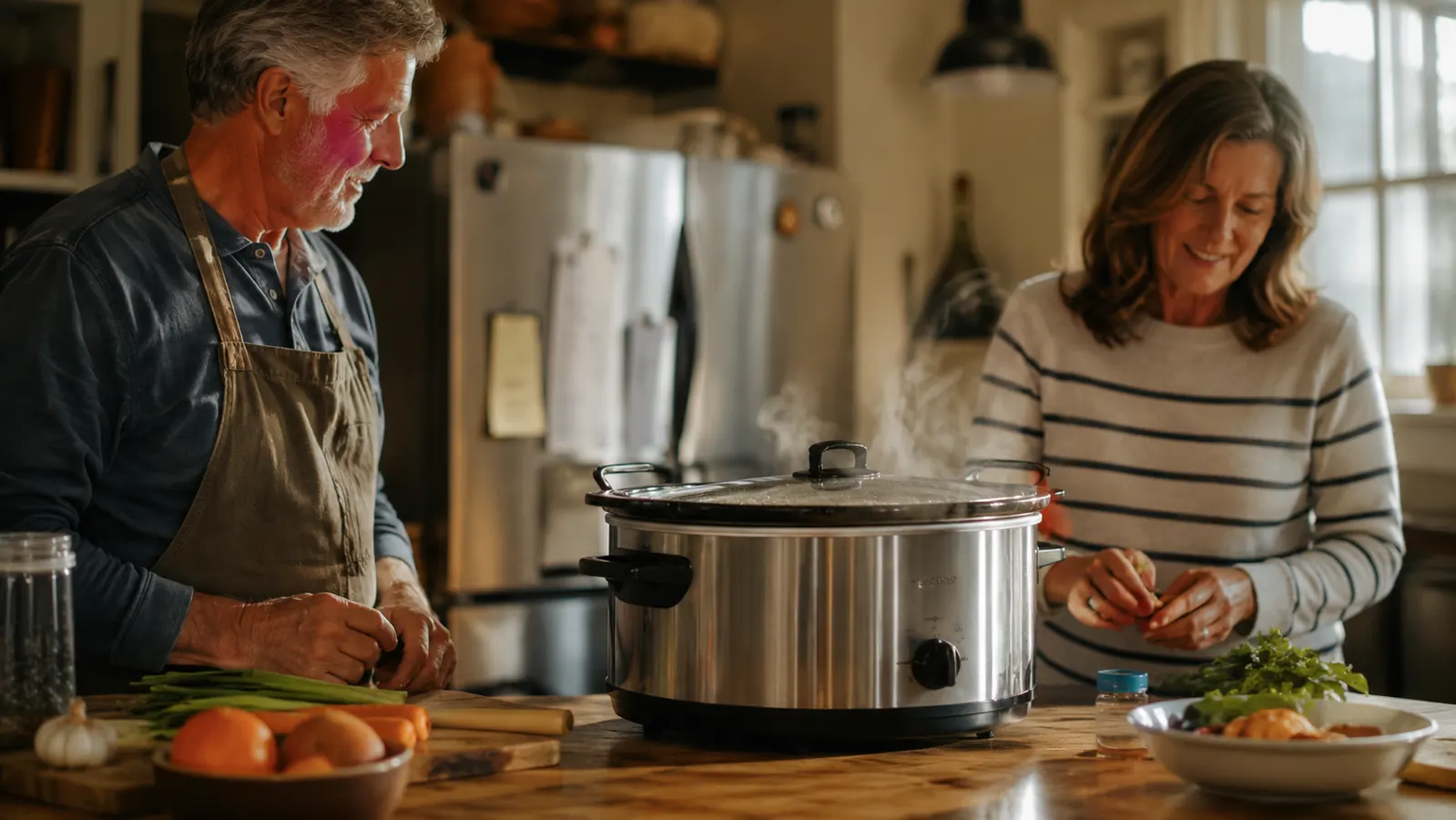
I'll tell you something nobody wants to admit when they're reviewing a Crock-Pot: half the reason people buy one is nostalgia. Their mother had one, or their aunt did, and it just feels like the right appliance to own. That's not a review, that's a feeling. So let me back up and give you the real thing. My name's Danny Kowalski, I spent thirty years running the line in a couple of diner kitchens around Toledo, and I know the difference between a tool that earns its drawer space and one that just sits there looking useful. I bought the Crock-Pot 7-Quart Manual Slow Cooker this past January, the stainless steel version with the oval stoneware insert, because my wife Carol wanted something big enough to handle a pot roast for six without babysitting it all day.
A year and change later, I've got opinions nobody put in the box. Not complaints exactly, but the kind of small honest truths you only get from actually cooking Sunday dinner in the thing week after week instead of running it once for a photo. This isn't the review that tells you the Crock-Pot changed my life. It didn't. It's the review that tells you what it's actually like to own one, quirks included, so you know what you're getting before you set it on your own counter.
The Quick Verdict
A dependable, no-frills workhorse. The Crock-Pot brand earns its reputation on the food it produces, not on features it doesn't have, and there are a few real quirks worth knowing before you buy.
Amazon Check Today's Price →Skip the digital gimmicks and get the one thing that actually matters, consistent low heat
The Crock-Pot 7-Quart Manual Slow Cooker is built the way appliances used to be built. One dial, one job, and it does that job every time.
Amazon Check Today's Price on Amazon →How I've Used It
I'm not a lab, I'm a kitchen. So my testing was just my normal Sunday routine plus whatever Carol threw at it during the week. Chuck roasts, pulled pork for my grandson Tyler's birthday back in March, a dozen batches of chili during football season, and more pots of beans than I can count. The Crock-Pot has been in near constant rotation since the day I plugged it in.
What I wanted to know going in wasn't whether it would cook food. Every slow cooker cooks food eventually. I wanted to know if the Crock-Pot name still meant something after all these years of every big box store selling a version of the same thing, and whether the manual, no-frills model was actually the smarter buy over the ones with the digital timers and the app controls that everybody's cousin seems to have now.
Short answer, it mostly does mean something. The heating element in this Crock-Pot holds a steadier low temperature than two other slow cookers I've used over the years, including one with a fancy programmable panel that a niece gave us and that we quietly retired. But steady heat isn't the whole story, and I'll get into the parts that surprised me.
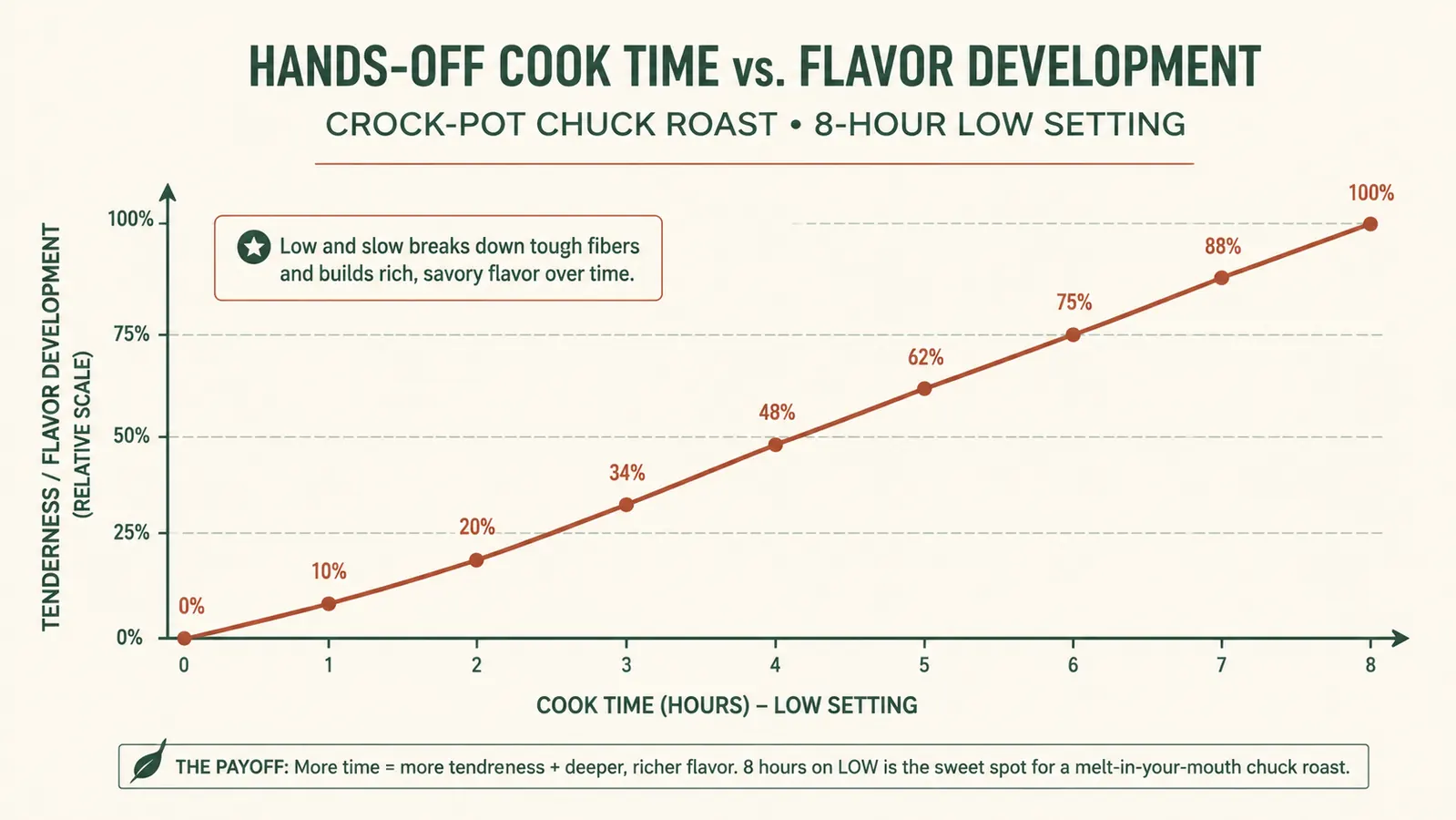
I also ran it side by side with my old stovetop method one Sunday just to compare, browning a chuck roast on the stove first and then finishing it in the Crock-Pot for eight hours on Low while Carol and I ran errands and picked up Tyler and my granddaughter Emma from soccer. We came home to a kitchen that smelled like a diner on a Sunday morning, and that alone told me the Crock-Pot was doing its job right.
The Manual Dial Nobody Warns You About
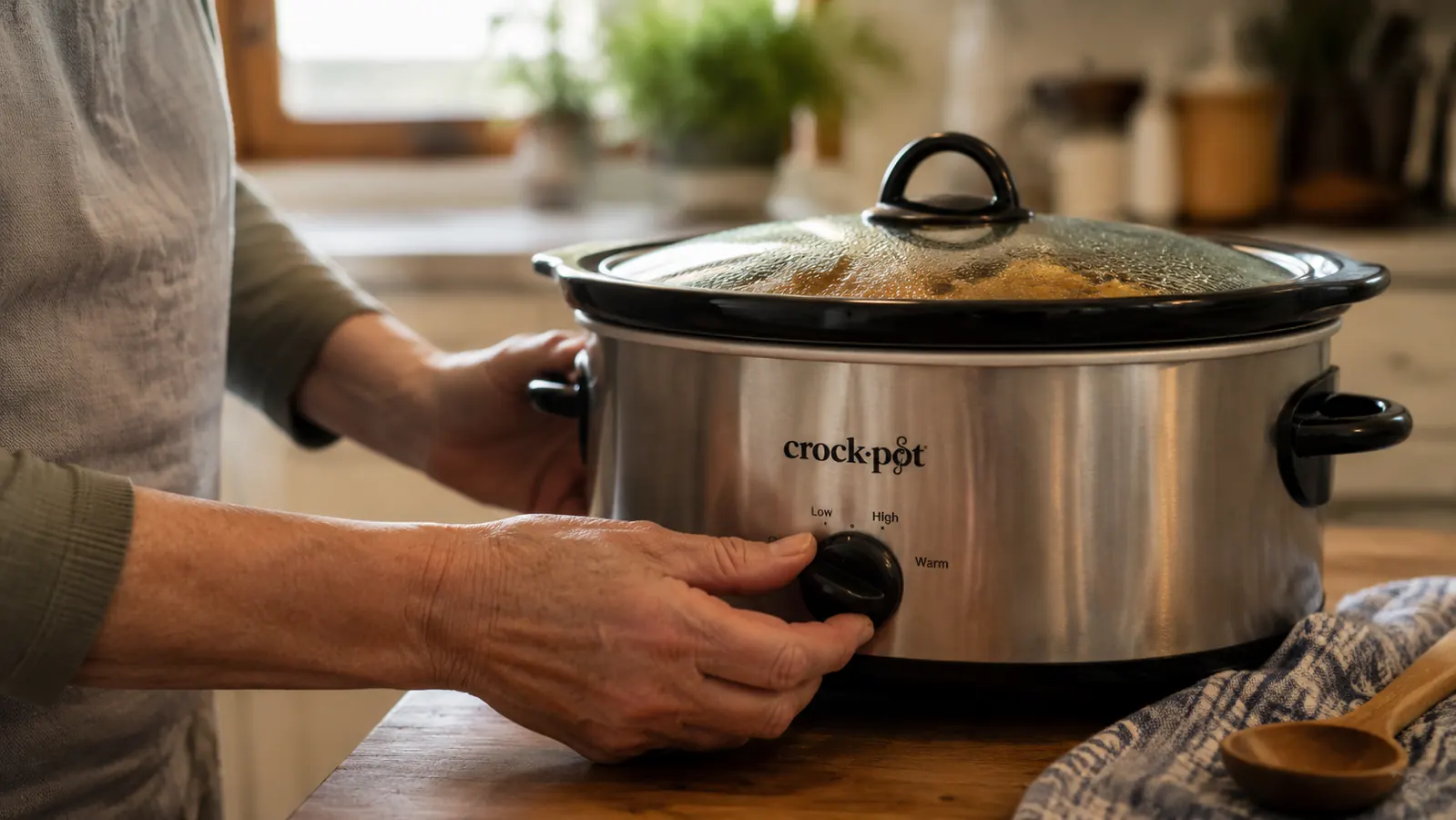
Here's the thing the five-star reviews don't tell you. This Crock-Pot has one dial. Off, Low, High, Warm. That's it. No timer, no auto shutoff, no delay start, no way to tell it to run for six hours and then switch to warm on its own. If you're used to a digital slow cooker or an Instant Pot with a display, this is going to feel like a step backward the first week you own it.
It took me a minute to adjust. The first two times I used the Crock-Pot I forgot to switch it off Low and onto Warm before I left for the hardware store, and I came home to a roast that had gone a little past where I wanted it. Not ruined, the Crock-Pot's Warm and Low settings are close enough that overcooking isn't a disaster the way it can be with a pressure cooker, but it's a real adjustment if you've never owned a manual model.
Once I got used to setting a timer on my own phone instead of trusting the appliance to do it, this stopped being a problem. But I'd be lying if I said the lack of a built-in timer wasn't a legitimate knock against the Crock-Pot for anybody who forgets things easily, which around our house is basically everybody.
What the Stoneware Actually Handles
The 7-quart size on this Crock-Pot is genuinely big. It fits a 6-pound bone-in chuck roast with room to spare for carrots and onions around it, and I've fit a whole 8-pound pork shoulder in there for pulled pork, though I had to cut it into two pieces to get the lid to seat right. If you're cooking for four to six people regularly, or you like leftovers, this size makes sense. If it's just you and one other person, you're going to be looking at a mostly empty stoneware insert most nights, and that's not a great use of counter space.
The oval stoneware insert is heavy, heavier than I expected honestly, and it's not a light lift when it's full of hot liquid and a roast. Carol has arthritis in her wrists and she's told me more than once that pulling the full insert out of the Crock-Pot base to serve is the one part of the whole process she doesn't love. It's dishwasher safe, which is nice, but you still have to get it there first, and a full 7-quart pot is not a one-handed job.
One thing I'll flag honestly, because it happened to us, is that stoneware can crack if you go from hot to cold too fast. We had a smaller Crock-Pot years ago that developed a hairline crack when Carol rinsed it under cold water right after a long cook. This 7-quart insert hasn't cracked on us, but I let it cool on the counter for a while before it touches water now, and I'd tell anybody buying this Crock-Pot to do the same.
I also noticed the oval shape matters more than people think. A round slow cooker of the same volume wouldn't fit a whole chuck roast or a rack of ribs nearly as well. The oval stoneware on this Crock-Pot is built for actual cuts of meat, not just soups and stews, and that's the detail that sold me on this shape over the round models I looked at first.
The Lid Rattle and the Small Annoyances
The glass lid on this Crock-Pot rattles a little when it's cooking on High. It's not loud, it's not a defect, it's just the nature of a loose-fitting glass lid over a boiling pot, but if you've got an open kitchen and you're trying to watch TV in the next room, you'll hear it. I got used to it, but Carol still comments on it sometimes.
The cord on the Crock-Pot is on the shorter side, maybe three feet, which meant I had to rearrange where I keep it because our nearest outlet wasn't close enough to the spot on the counter Carol wanted it. Small thing, but if you've got a specific spot in mind for your slow cooker, measure the distance to the outlet before you get your heart set on the placement.
And the handles on the base get warm to the touch after a long cook, not scalding, but warm enough that I always use a towel when I move it. None of these are deal breakers. They're just the kind of small honest details that a thirty-second unboxing video isn't going to catch, and that only show up after you've lived with the Crock-Pot for a while.
The Warm Setting: More Useful Than I Expected
I almost didn't mention this because it sounds minor, but the Warm setting on this Crock-Pot has turned out to be one of the features I use the most, and nobody talks about it. Between diner shifts back in the day, keeping food at a safe holding temperature without drying it out was half the job, and this Crock-Pot's Warm setting does that better than I expected from a forty-dollar appliance.
Tyler's baseball games run long some Saturdays, and dinner used to either get cold or get eaten in shifts. Now I just switch the Crock-Pot to Warm once the roast is done, and whoever gets home first eats a plate that still tastes like it just came off the stove two hours later. It's not a complicated feature, but it's the kind of thing that quietly makes a Crock-Pot more useful than a fancier machine that treats holding temperature as an afterthought.
The one caution here, and it's a real one, is that Warm is not a substitute for Low if the food isn't fully cooked yet. I made that mistake early on with a batch of dried beans that needed more time than I gave them, and the Warm setting just held them at an undercooked state instead of finishing the job. Learn from that one. Get your Crock-Pot to fully cooked on Low or High first, then switch to Warm.

Cleanup and Value Over a Year
Cleanup is where this Crock-Pot genuinely earns its keep. The stoneware and the glass lid both go in the dishwasher, and after a year of near weekly use I haven't had any staining that didn't come out. The stainless steel base wipes clean easily since nothing but the occasional drip touches it. Compare that to a stovetop dutch oven, which I also own and love, but which takes real scrubbing after a long braise. The Crock-Pot wins on convenience every time.
On price, today's price for this Crock-Pot sits well under fifty dollars most of the time, which is honestly one of the better values in my whole kitchen. I've spent more on a decent chef's knife. For what it does and how often it gets used in our house, the cost per use has to be pennies at this point.
I also want to be fair about depreciation, because nobody talks about that with a slow cooker either. A year of hard use has left the stainless steel exterior on this Crock-Pot with a couple of light scuffs, and the dial has a faint worn spot where my thumb turns it most. Nothing that affects how it cooks, but it doesn't look brand new anymore, and I'd rather tell you that than pretend it still looks like the day it came out of the box.
What I Liked
- Steady, even Low heat that doesn't scorch food overnight
- Genuinely large 7-quart capacity fits a big roast or shoulder
- Dishwasher-safe stoneware and lid make cleanup easy
- Stainless steel exterior wipes clean and looks decent on the counter
- Warm setting genuinely holds food well for hours
- Priced low enough that it's an easy buy without overthinking it
Where It Falls Short
- No digital timer or auto shutoff, purely a manual dial
- Full stoneware insert is heavy to lift and carry, tough on weak wrists
- Glass lid rattles noticeably on the High setting
- Short power cord may not reach your preferred outlet
- Stoneware can crack if shocked from hot to cold too quickly
- Exterior shows light wear after a year of regular use
This isn't a smart appliance and it doesn't pretend to be one. It's a pot that gets hot on a schedule you control, and after thirty years of kitchen work, that's most of what I actually want.
Who This Is For
If you're feeding four or more people regularly, or you like cooking once and eating off it for a few days the way Carol and I do, this Crock-Pot makes a lot of sense. It's also a solid pick if you've been burned before by an overcomplicated appliance with a control panel full of buttons you never touch. This model does one thing, and it does that one thing reliably, which is exactly what a lot of home cooks actually need out of a slow cooker.
It's also a good fit if grandkids or a busy household schedule means dinner doesn't happen at a fixed hour. Between the big capacity and that Warm setting doing real work, this Crock-Pot has bailed us out more Saturdays than I can count.
Who Should Skip It
If you're cooking for one or two people most nights, the 7-quart size is more than you need, and you'd be better served by a smaller model that doesn't eat half your counter. And if you specifically want a delay-start timer because your schedule is unpredictable, or you've got weaker hands and a heavy stoneware insert is a real concern, it's worth looking at a Crock-Pot model with the digital programmable panel instead. This manual version rewards people who don't mind setting their own reminders.
It's also not the right pick if you're chasing speed. A Crock-Pot, this one included, is built for hands-off hours, not for getting dinner on the table in forty-five minutes. If that's what you need most nights, a pressure cooker will serve you better than any slow cooker on the market.
A pot that just cooks, no app, no panel, no learning curve
After a year of real Sunday dinners, this Crock-Pot has earned its spot on our counter. If a plain dial and honest results sound like what you actually want, it's worth a look.
Amazon Check Today's Price on Amazon →