
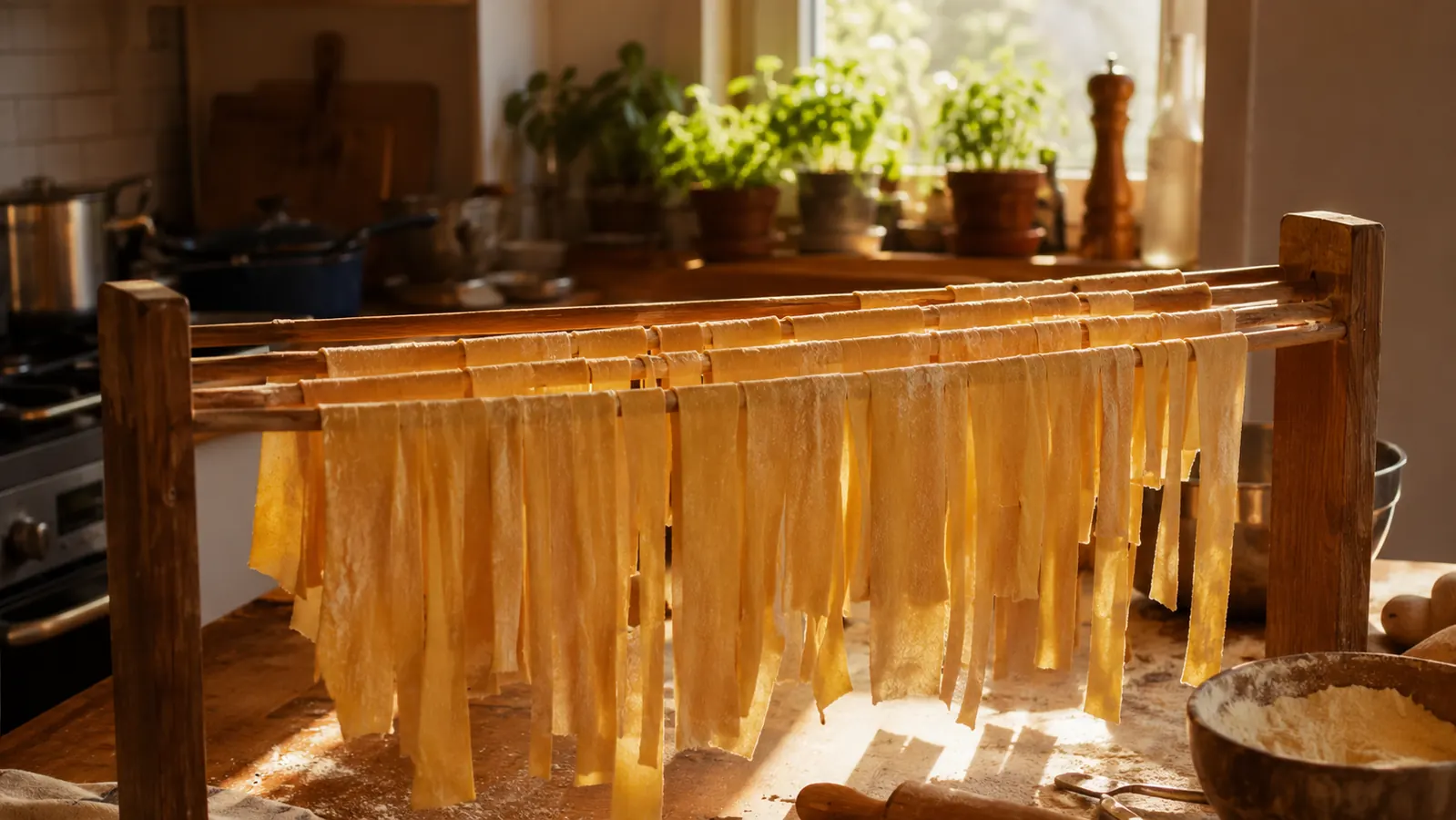
I spent thirty years running lines in diner kitchens around Toledo, and in all that time I never once made fresh pasta on purpose. We used the dry stuff out of the number 10 cans, boiled it in a rolling boil pot the size of a trash can, and moved on to the next ticket. So when my daughter gave me a Marcato Atlas Pasta Machine for my retirement last November, I figured it would sit in a cabinet next to the fondue pot nobody uses, another well-meaning gift I'd nod at and never touch. Eight months and something like thirty Sunday dinners later, it's the one piece of equipment on my counter that never gets put away.
The Marcato Atlas is the Italian-made manual crank machine, the one with the red dial and the chrome rollers, made in the same factory outside Bassano del Grappa since 1930. It comes with a hand crank, a pasta cutter attachment for fettuccine and tagliolini, and a set of instructions that assume you already know what you're doing. I didn't. My wife Carol and I figured it out together over three ruined batches before we got a sheet of dough that didn't tear halfway through the rollers. I'm writing this review the way I'd talk to a guy at the counter of my old diner, no marketing gloss, just what actually happened in our kitchen.
Quick Verdict
The Quick Verdict
A well-built, no-nonsense manual pasta roller that earns its counter space if you'll actually use it weekly. Not for the person who wants a button to push.
Amazon Check Today's Price →The machine that turned Sunday dinner into an event again
If you're tired of dry noodles that taste like the box they came in, the Marcato Atlas is the tool that changes that. Check today's price on Amazon and see if it fits your kitchen.
Amazon Check Today's Price on Amazon →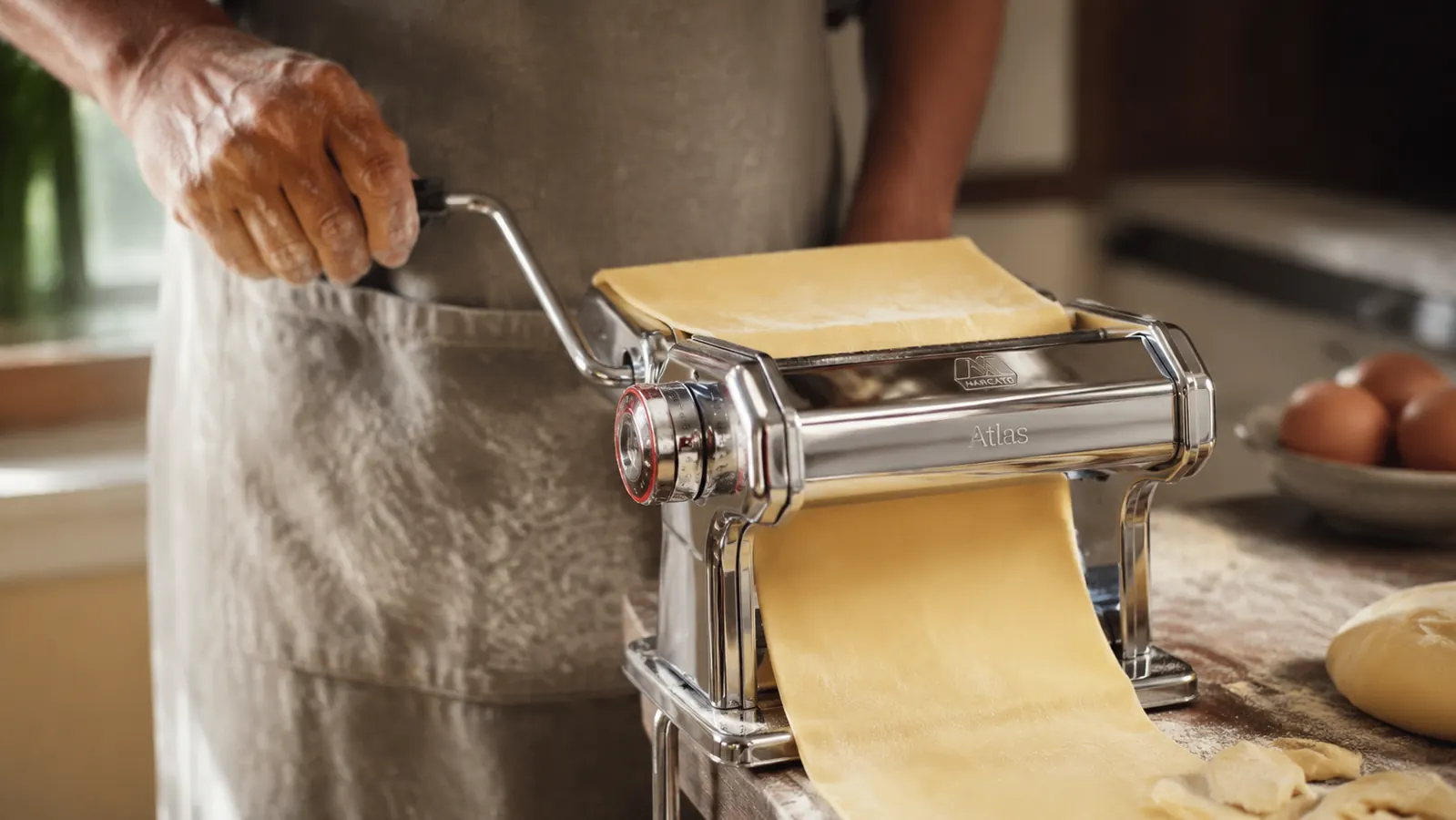
How I've Used It
We didn't start out doing this every week. The first month it was maybe twice, both times on a Saturday when I had nothing else going on and wanted to see if the Marcato Atlas was worth the drawer space it was taking up. By January it had become the Sunday routine, right alongside church and Carol's crossword. Carol mixes the dough, usually a simple 00 flour and egg combination, sometimes with a little semolina worked in for tooth, and I run it through the machine while the grandkids fight over who gets to turn the crank first.
My granddaughter Nora is seven and strong enough now to crank the rollers herself on setting 3 or 4, which tells you something about how much force this thing actually needs. It's not light work, but it's not a wrist workout either. I clamp the Atlas to the edge of our butcher block island with the built-in table clamp, and it holds firm through a full session of rolling six or seven dough balls down to sheet thickness, even with two kids leaning on the counter watching.
By March we'd made fettuccine a dozen times, tried our hand at ravioli using the sheets cut down and filled by hand, and did one memorable batch of pappardelle for a birthday dinner that came out wide and a little uneven because I rushed the rolling. That's on me, not the machine. The Atlas does exactly what you tell it to do, which is both the appeal and the catch, and it's forgiven me more mistakes than any piece of equipment I ever worked with in a professional kitchen.
The Roller Action and Build Quality
This thing is heavier than it looks in photos. It's cast in chromed steel, not stamped aluminum, and you feel that the second you pick up the box. The rollers themselves have almost no play in them, even after eight months of weekly use. I've worked plenty of restaurant equipment that started rattling within a year, and the Atlas hasn't loosened up at all, not the crank shaft, not the thickness dial, none of it.
The thickness dial runs from setting 1, which is thick enough for a hearty pappardelle, down to setting 9, which gets thin enough for ravioli wrappers you can nearly read through. I mostly live between settings 5 and 6 for everyday fettuccine. The dial clicks into place with a solid, satisfying stop, no mushy in-between feeling like some cheaper machines I've read complaints about online before we bought this one.
The crank handle attaches to either side of the machine, which matters if you're left-handed like my son-in-law. He cranks while I feed the dough, and switching the handle over took ten seconds, no tools needed. Small detail, but it's the kind of thing that tells you Marcato actually thought about who'd be using this, not just how it photographs on a shelf.
Making the Switch From Store Bought Dough
I'll be honest, the machine is only half the equation. The first two batches we ran through the Atlas were disasters because our dough was wrong, not because of the roller. Too wet and it sticks to everything, gumming up the rollers until you're pulling strands off with your fingers. Too dry and it tears at setting 4 like tissue paper. Carol settled on 100 grams of 00 flour to one large egg, roughly four to one by weight, and that ratio has been consistent for us since December.
Once the dough is right, the Atlas does the rest without a fight. You run the sheet through starting at setting 1, fold it in thirds, run it through again a few times to develop the gluten, then step down through the settings one at a time until you hit your target thickness. Skip a setting and the dough tears. I learned that the expensive way with a batch that ended up as pasta scraps for the dog, who did not complain.
What surprised me most is how much better fresh pasta tastes with a simple sauce. We're not talking anything fancy, just butter, parmesan, and cracked pepper some nights. The texture holds the sauce differently than dried pasta ever did in my diner days, and Carol says it's the first time in forty years of marriage she's seen me get excited about noodles.
The Cutter Attachments and What We've Actually Made
The Atlas ships with two cutter rollers built right into the frame, one for fettuccine and one for tagliolini, and you just slide the rolled sheet through whichever one you want. That's the extent of what comes in the box, and it's plenty for a family that mostly wants ribbon noodles. We picked up a separate ravioli attachment from Marcato a few months in, and it clamps onto the same machine, which I appreciated since it meant one more accessory instead of a whole second gadget.
Ravioli took us longer to get right than fettuccine did. The dough sheet has to stay thin and pliable while you're spooning in filling, usually ricotta and spinach at our house, and if you let it sit too long it dries out and won't seal. Nora is in charge of pinching the edges shut now, and she's better at it than I am, honestly. We've also cut wide sheets by hand with a pizza cutter for lasagna, which the Atlas handles fine since it's just doing the rolling and you finish the cutting yourself.
What we haven't tried, and probably won't, is anything shaped like a tube or a spiral. This machine rolls flat sheets and cuts ribbons. If you're picturing rigatoni or shells, that's a different tool entirely, usually an electric extruder, and the Atlas was never built for that job.
Cleanup and Storage
Marcato is clear about this in the instructions and I'll repeat it because it matters: you never run this thing under water. The rollers aren't stainless, and getting water into the mechanism will rust it. You brush off dried dough bits with the small brush that comes in the box, and that's it. I keep a dedicated pastry brush next to the machine now just for this job, and it takes maybe two minutes once you're used to it.
Storage is easy enough. It comes with a cardboard box that Marcato clearly expects you to keep, which surprised me since most kitchen gadgets ship in packaging you toss on day one. We keep ours in a lower cabinet between uses, wrapped in a dish towel to keep dust off the rollers. The clamp does leave a small dent mark on our butcher block edge after months of tightening down, nothing serious, but worth knowing if you've got a nicer countertop you're protective of.

Where It Struggles
The hand crank is the whole point of this machine, but it's also the tradeoff. Rolling six batches of dough through nine settings each takes real time, closer to forty-five minutes once you count the folding and stepping down. On a Sunday with nowhere to be, that's part of the charm. On a Tuesday after work, it's not happening. We only use the Atlas on weekends for that reason, and dried pasta still covers most weeknights in our house.
Marcato sells a motor attachment separately that clips onto the crank shaft, and I've thought about picking one up, but it runs almost as much as the machine itself and feels like it defeats some of the purpose. I'd rather have Nora crank it than buy a motor. We looked at it as a nice-to-have, not a fix for anything actually broken about how the machine works by hand.
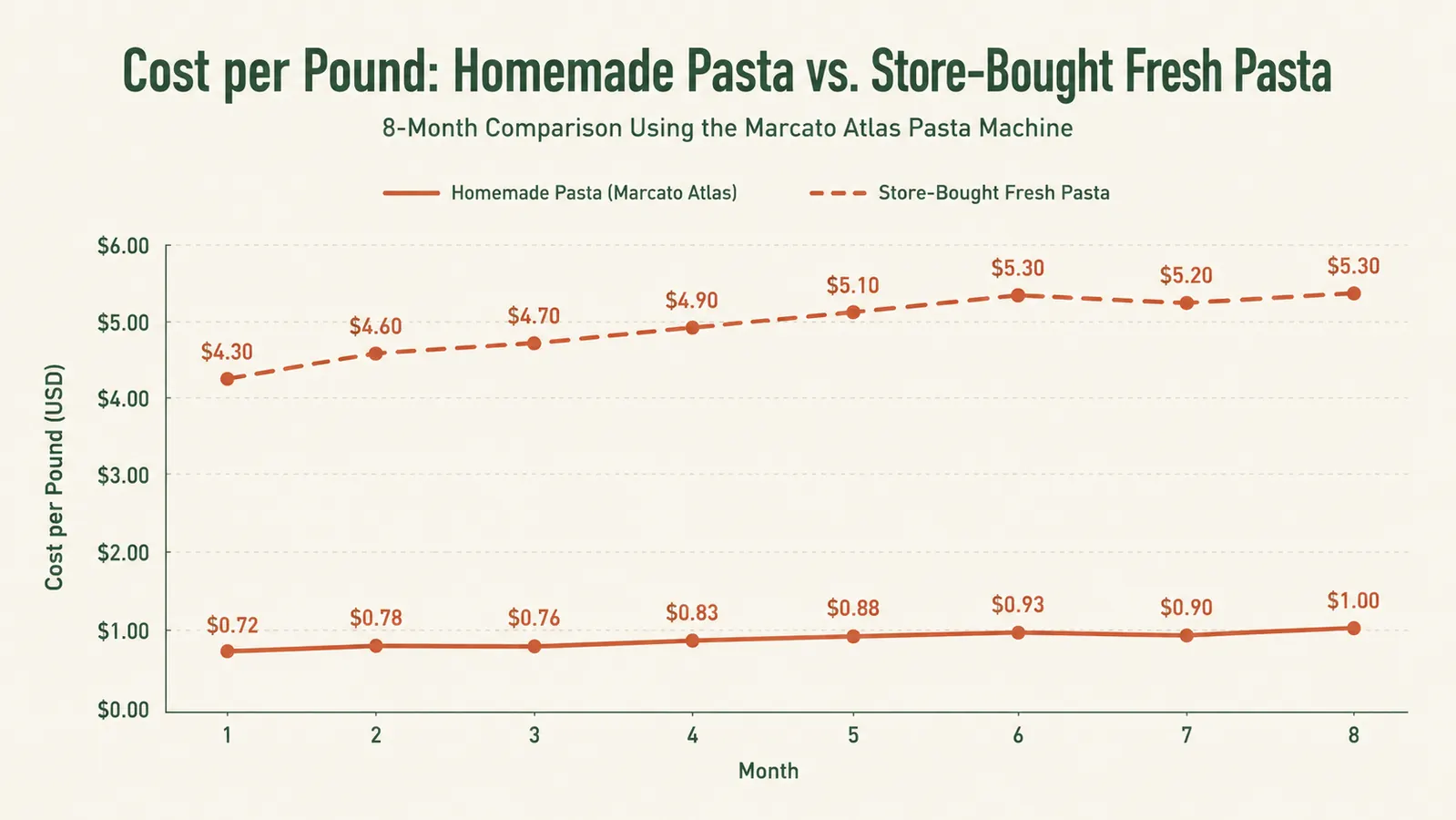
At roughly two hundred dollars, the Atlas isn't cheap next to a bag of dried pasta. But when I ran the numbers against buying fresh pasta from the grocery case, which we used to do occasionally for special dinners, the machine paid for itself within a few months given how often we now use it. That math only works if you actually use it weekly like we do.
What I Liked
- Heavy chromed steel construction that hasn't loosened after 8 months of weekly use
- Nine thickness settings with solid, distinct click stops
- Crank handle works from either side, good for lefties
- Built-in clamp holds firm on a standard counter edge
- Comes with fettuccine and tagliolini cutter included
Where It Falls Short
- Hand crank requires real time commitment, not a weeknight tool
- No water cleanup allowed, brush-only maintenance takes getting used to
- Clamp can leave small marks on softer countertop edges
- Learning the right dough ratio takes a few wasted batches
- Motor attachment sold separately and priced almost like a second machine
The Atlas doesn't do anything for you. It just does exactly what you ask it to do, every single time, which after thirty years of temperamental restaurant equipment is worth more to me than any button.
Who This Is For
If you cook for a family that sits down together on a regular basis, or you want a reason to get grandkids or kids involved in something hands-on in the kitchen, the Marcato Atlas earns its keep fast. It's also a solid fit for anyone who already bakes bread or makes their own dough for other things and won't be intimidated by a little trial and error with ratios. The build quality means you're not going to outgrow it or wear it out anytime soon. I'd also point it at anyone who grew up eating fresh pasta somewhere and has been chasing that texture out of a box ever since without knowing what they were missing.
Who Should Skip It
If you're looking for a weeknight shortcut, this isn't it. An electric pasta maker or extruder will get you noodles faster with less arm work, even if the texture comes out a little different. And if pasta night happens maybe twice a year in your house, the Atlas will just be another gadget gathering dust. Buy it because you'll use it, not because it looks nice on a shelf.
Ready to make Sunday dinner an actual event again
Eight months in, this is still the one tool on my counter that never gets put away. Check today's price on Amazon before you decide.
Amazon Check Today's Price on Amazon →