
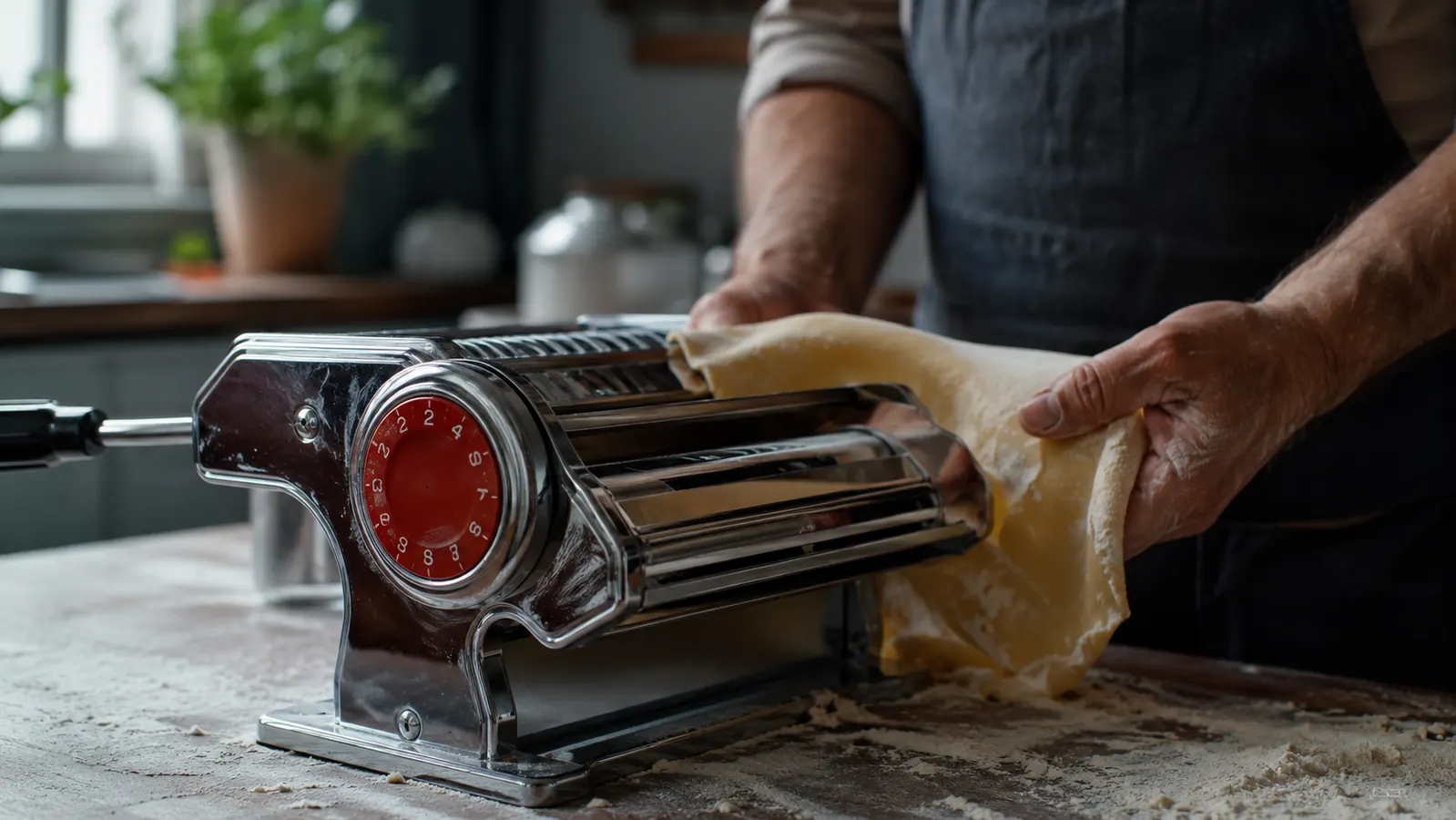
Every review of the Marcato Atlas Pasta Machine I read before I bought mine sounded like it was written by the company that makes it. Five stars, glowing paragraphs about heirloom quality, not a single complaint worth mentioning. I've been cranking dough through mine for a little over a year now, and I want to tell you what those reviews left out, because some of it would have changed how I planned my first few months with this thing.
I'm Danny Kowalski. I ran diner lines around Toledo for thirty years before I retired, and I've handled enough restaurant equipment to know that every tool has a downside somebody's not telling you about. The Marcato Atlas is a good machine. I'm not walking that back. But I bought it expecting a simple box-to-table experience, and what I got was a machine that rewards patience and punishes anybody who skips the fine print. That's the review I wish somebody had written for me.
My wife Carol thought I was being dramatic the first time I complained about it, since to her it just looked like a shiny kitchen gadget doing its job. But she's the one who watched me toss two ruined batches of dough in the trash and scrub rust off a roller with steel wool at eleven at night. She's also the one who said, more than once, that if I was going to write about this thing, I owed people the parts that actually happened, not just the parts that make a good Sunday dinner photo.
Quick Verdict
The Quick Verdict
A genuinely well-built machine that gets oversold by marketing and undersold by the ugly parts of ownership. Great tool once you know what you're actually signing up for.
Amazon Check Today's Price →Before you buy the Atlas, know what actually happens after the box opens
This review covers the parts the glossy listings skip, from cleanup rules to the real cost of going all-in on attachments. If you still want it after reading this, check today's price on Amazon.
Amazon Check Today's Price on Amazon →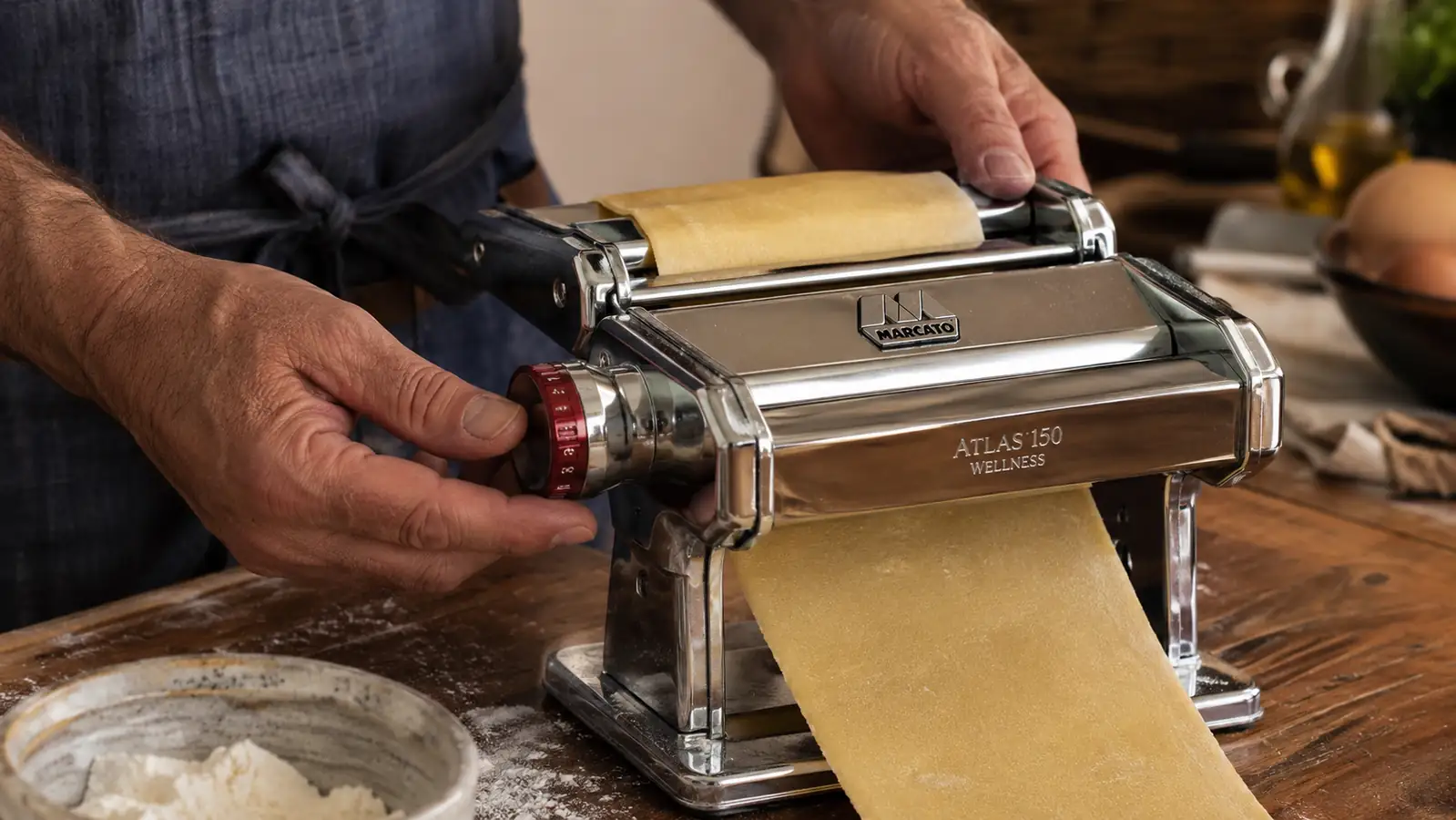
What I Actually Did Before Writing This
I didn't write this review after one perfect Sunday batch. I logged thirteen months of ownership, kept a running list of every gripe I had scribbled on a notepad by the stove, and went back and read through close to eighty customer reviews on Amazon, the ones that weren't five stars, looking for patterns that matched or didn't match what I was seeing in my own kitchen. Most of my complaints lined up with what other owners were saying. A few didn't, and I'll get into those too.
I tested the Marcato Atlas the way I'd test a new piece of line equipment, by using it under real conditions instead of ideal ones. That meant running it on a rushed Tuesday with the grandkids underfoot, not just a leisurely Sunday with nothing else on the calendar. It meant letting the dough sit too long once or twice to see what happens. It meant leaving it un-dried overnight by accident, which I'll admit to in a minute, because that mistake taught me more than any review I read beforehand.
I also kept notes on how long each session actually took, start to finish, because thirty years on a line taught me that time is the thing people underestimate most when they buy a new kitchen tool. A weeknight batch for the two of us runs about thirty-five minutes once you're comfortable with the machine. A full family batch with sauce and cleanup runs closer to ninety. Nobody selling this machine puts that number anywhere near the listing, and it matters more than most of the specs they do list.
The short version is this. The Marcato Atlas performs exactly as advertised when you treat it right. The problem isn't the machine's performance. It's that almost nobody selling it tells you what treating it right actually requires, in time, in money, and in patience for a learning curve that's steeper than the product photos suggest.
The Price Tag Nobody Warns You About
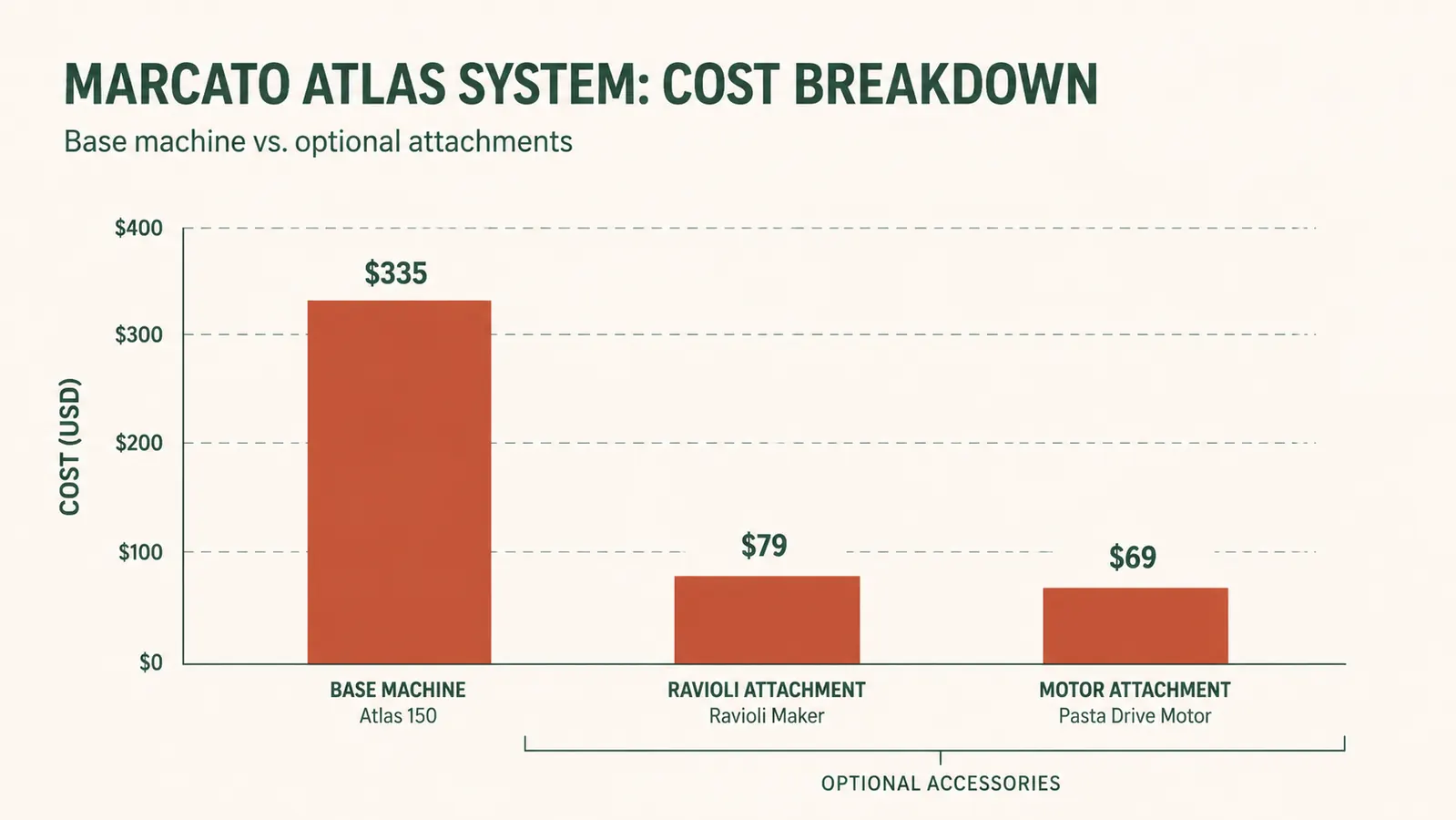
Here's the first thing that caught me off guard. The base Marcato Atlas comes with the hand crank and a cutter for fettuccine and tagliolini, and that's genuinely a solid starting kit. What the listing photos don't make obvious is that the ravioli attachment, the different width cutters, and the electric motor conversion are all sold separately, and none of them are cheap add-ons. Once you start wanting to do more than flat noodles, you're looking at spending close to what you paid for the base machine all over again.
I didn't understand this going in. My daughter gave me the base unit as a gift, and I assumed I'd grow into the rest of the system the way you'd add attachments to a stand mixer, a little at a time, no big deal. Then I priced out the motor attachment because cranking by hand for forty-five minutes on a big family batch was wearing out my shoulder, and I about choked on my coffee. If you're picturing yourself eventually going electric, price that out before you buy, not after.
I also looked at a couple of cheaper off-brand pasta rollers before settling on staying with the Atlas system instead of switching, mostly out of curiosity about whether I was overpaying for the name. What I found is the off-brand machines save you money up front but the rollers develop play and wobble within months, based on the reviews I read, which means you're replacing the whole unit instead of adding one attachment. That's the real comparison worth making, not base price against base price, but total cost over three or four years of actual use.
None of this makes the Atlas a bad value. The base machine alone does plenty, and I went almost eight months on hand crank power before I even looked at the motor. But if a review tells you this thing is a complete pasta system out of the box, they're stretching the truth. It's a very good starting point that gets expensive if you chase the full setup.
The Cleaning Rule That Catches Everyone Off Guard
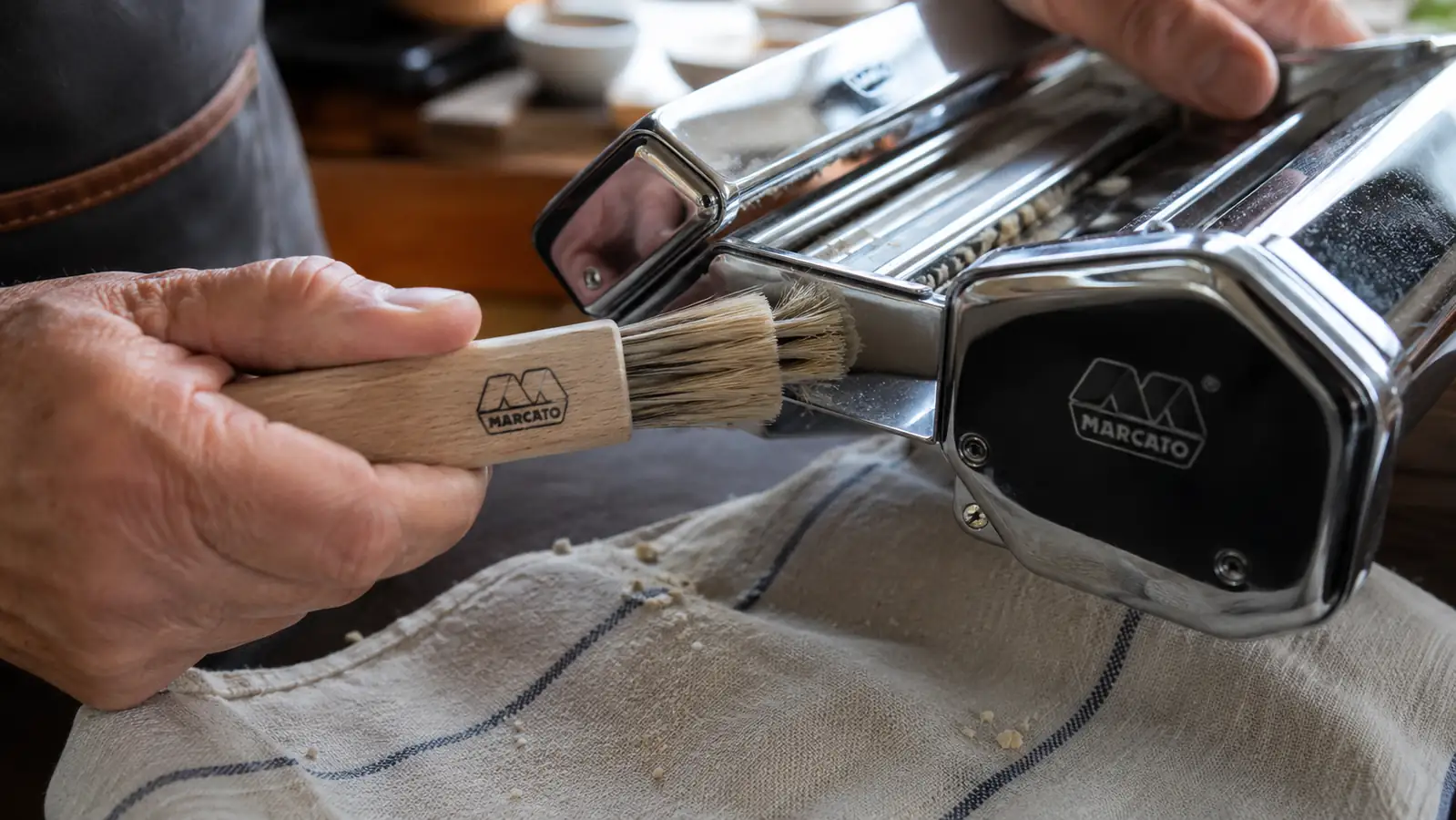
This is the one that really should be printed in bold letters on the box. You cannot run water anywhere near this machine. Not a rinse, not a wipe with a damp rag near the rollers, nothing. It's brushed clean only, dry cloth and a stiff little brush to work dried dough flecks out from between the rollers. I knew this going in because I'd read it somewhere, but knowing it and living with it are two different things.
About four months in, I left the Atlas sitting on the counter overnight after a muggy August evening, still clamped down, with a little residual flour dust and moisture from the dough clinging to the rollers. By morning there was a faint rust bloom starting on one edge of a roller, small, but real. I caught it early, worked it out with fine steel wool and a light coat of food-safe mineral oil like Marcato's own instructions recommend, and it hasn't come back. But that's a real risk with this machine that nobody selling it makes loud enough noise about.
If you live somewhere humid, or if your kitchen runs warm and damp the way ours does in summer with the stove going, you need to dry this thing thoroughly after every single use and store it somewhere it won't sit in ambient moisture. That's not a dealbreaker. It's a discipline. But it's a discipline the marketing copy never mentions, and I've seen more than a few Amazon reviews from people who got surprised by rust and left one-star ratings over what was really a storage mistake, not a manufacturing defect.
The Learning Curve Is Real, Here's What It Actually Looks Like
The product photos show ribbons of pasta gliding smoothly through the rollers like it's the easiest thing in the world. My first three attempts tore apart at setting 5 or 6 and looked like something the dog got into. It took me close to a month of weekend attempts to land on a dough ratio that actually cooperated with the machine, roughly two cups of 00 flour to three eggs, with a spoonful of semolina worked in for structure once I figured out plain 00 flour alone was tearing too easily on the thinner settings.
Nobody tells you the machine is unforgiving of a wet dough. If your dough is even slightly too tacky, it grabs the rollers instead of sliding through clean, and you end up with a gummy mess wrapped around the crank shaft that takes ten minutes to pick apart with a toothpick. I learned to err on the drier side and let the rollers do the work of smoothing it out, which is the opposite of what most bread and pizza dough instincts tell you to do.
There's also a folding technique, running the dough through on the thickest setting several times and folding it in thirds before you start thinning it down, that almost none of the beginner reviews mention but that makes an enormous difference in how the final sheet holds together. Once I figured that out on my own, roughly six weeks in, my success rate went from maybe one good batch in three to nearly every batch turning out usable. That's a real learning curve, and anyone telling you it's intuitive out of the box either got lucky or isn't being straight with you.
What the Amazon Reviews Get Wrong, and What They Get Right
Reading through the lower-rated reviews, a few complaints show up again and again. Some buyers say the roller alignment felt slightly off out of the box, with the sheet coming out a hair thicker on one side than the other. Mine was fine when it arrived, but I believe the people reporting this, because a manual crank machine built from stamped metal parts is going to have some unit-to-unit variation. If you get one with alignment trouble, Marcato's customer service has a decent reputation for replacing parts, worth checking before you assume you're stuck with it.
A second complaint that shows up a lot is people feeling burned by the motor attachment price after already buying the base machine, calling it a bait and switch. I don't think that's fair to the company, since the base unit was never marketed as motorized, but I do think it's a fair complaint about how the listings are laid out. You have to dig to find out the motor is separate before you're already invested in the system, and that's exactly the kind of thing I want you to know walking in, not after you've already committed a shelf and a habit to this machine.
Where I think the harsh reviews get it wrong is blaming the machine for problems that are really dough problems or storage problems, the rust issue I mentioned, the tearing dough issue, the gummy rollers. Those aren't defects. They're the learning curve I just walked you through, dressed up as a product complaint. I'd rather tell you the truth up front than let you think you're buying a plug-and-play appliance, because you're not, and going in with the wrong expectation is what turns a good tool into a one-star rant six weeks later.
What I Liked
- Genuinely solid chromed steel build that's held up over a year of regular use
- Thickness dial gives real, repeatable control once you learn your dough
- Company has a reasonable track record replacing units with alignment issues
- Base kit is a legitimate starting point, not a stripped-down teaser
Where It Falls Short
- Attachments and motor conversion cost nearly as much as the base machine combined
- Zero tolerance for water cleanup, real rust risk if you get lazy about drying it
- Dough ratio and folding technique take weeks to dial in, not a same-day skill
- Roller alignment can vary slightly unit to unit out of the box
- Storage case that came with mine is an awkward shape for a normal drawer
The Atlas isn't complicated. It's just unforgiving of shortcuts, and nobody selling it wants to say that part out loud.
Who This Is For
This machine is for someone who wants to learn a real skill, not just own a kitchen gadget. If you're the type who reads instructions twice and doesn't mind a few ugly batches on the way to a good one, the Atlas will reward you for years. It's also a good fit if you already cook from scratch regularly, because you'll have the dough instincts to adjust when something feels off, instead of blindly following a recipe card and getting frustrated when reality doesn't match the photo. Carol and I are both glad we stuck with it past that first rough month.
Who Should Skip It
If you want something you can pull out on a Tuesday night after work and have dinner on the table in twenty minutes with zero learning curve, skip this and look at an electric extruder machine instead. Skip it too if you're not willing to commit to the drying and storage discipline, because that rust spot on my roller was a real wake-up call, and I'm someone who's careful about equipment. And if the idea of budgeting for attachments down the road bothers you, go in knowing the base kit is where most people stop, and that's fine, but don't expect it to be the full system the box photos imply.
Know what you're buying before you buy it
The Marcato Atlas earns its reputation once you understand the real learning curve and the real cost of going beyond the base kit. If that sounds like a fair trade to you, check today's price on Amazon.
Amazon Check Today's Price on Amazon →